

Sleep Well and Get Up Safely — The Adapted Bedroom Guide for Seniors and the Disabled (2026)
Why adapting your bedroom matters
We spend a third of our lives in bed. For an elderly or disabled person, the bedroom is far more than a place to rest. A poorly adapted bedroom worsens pain, increases fall risk, and accelerates loss of independence.
Simple, affordable solutions exist: from ergonomic pillows to pressure-relief mattresses to bed rails. Every well-chosen aid restores confidence and relieves carers.
The 4 essential bedroom aids
1. Pressure-relief mattress overlay
For bed-bound individuals, pressure sores are a serious risk. An alternating-pressure overlay prevents these injuries by constantly shifting pressure points. Whisper-quiet (under 25 dB), fits any standard bed. Includes waterproof breathable cover.
Pressure-Relief Mattress Overlay — Protection & Comfort
Alternating pressure, near-silent, fits any bed. Waterproof cover included.
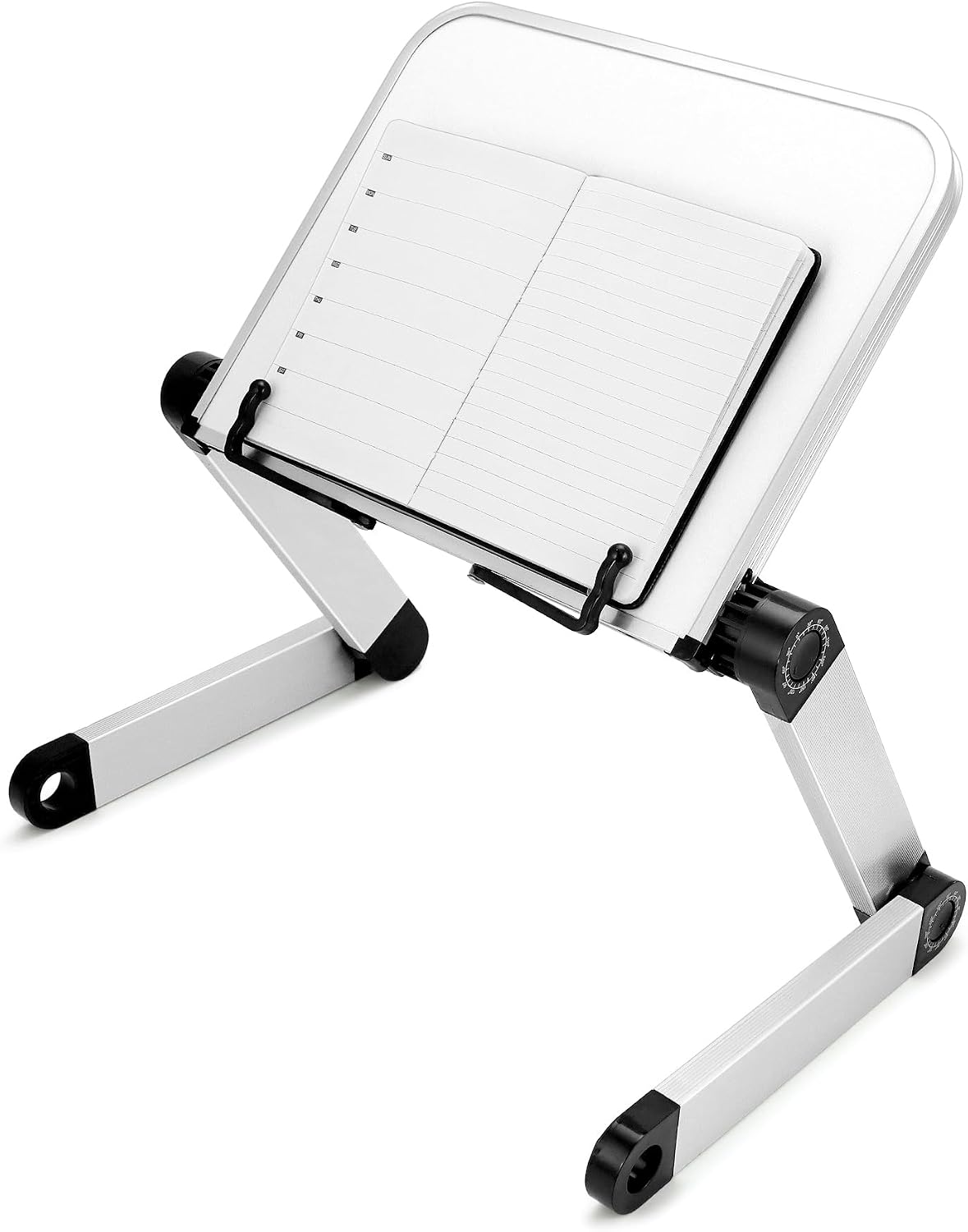
2. Orthopaedic back cushion
Reading, TV, meals in bed become enjoyable with proper support. High-density memory foam cushion contours to your spine. Under 2 kg, with carry handle and washable cover.
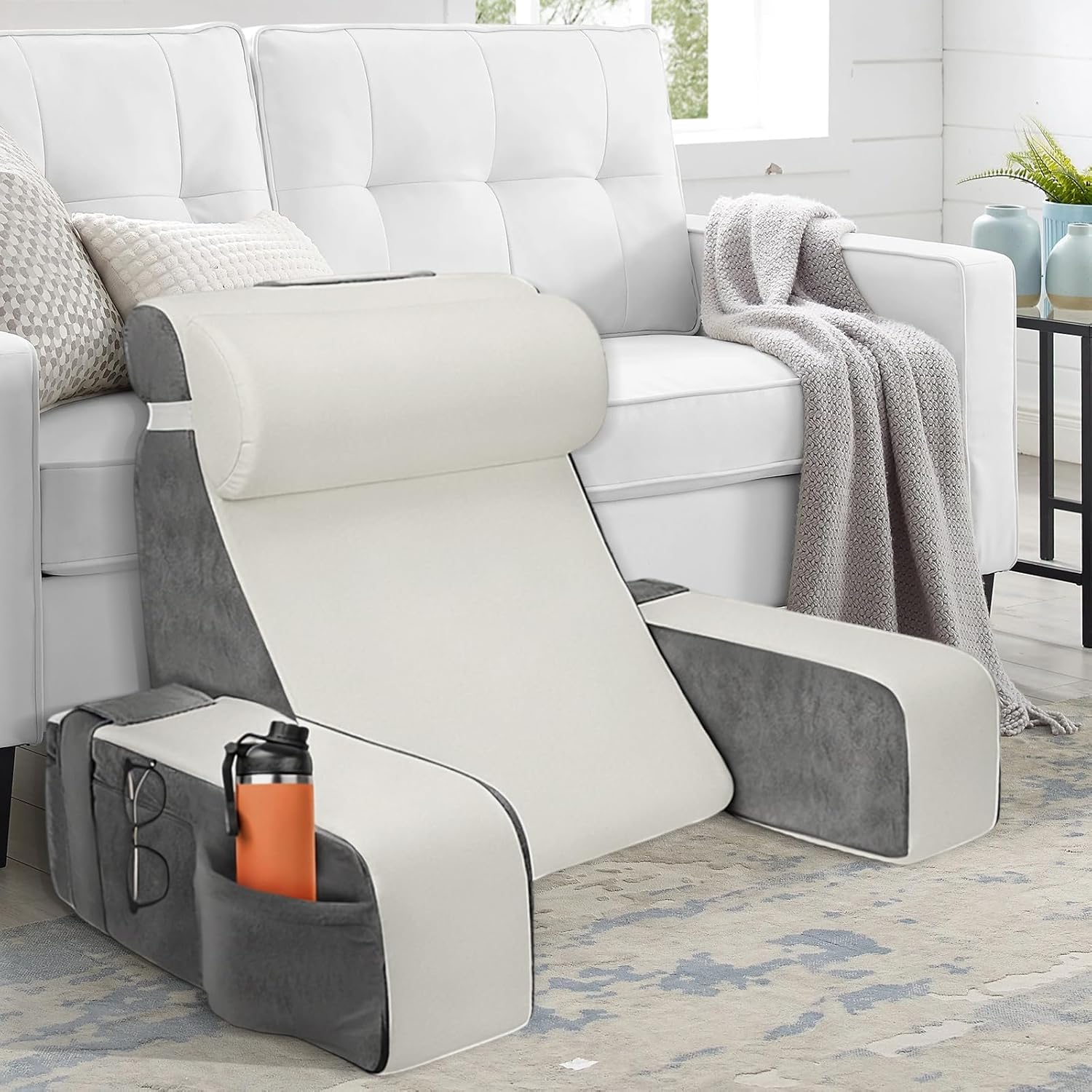
Orthopaedic Back Cushion — Sitting Comfort in Bed
High-density memory foam, contours to lumbar spine. Carry handle, washable cover.
3. Adjustable overbed table
When walking to the dining table is difficult, a height- and tilt-adjustable table restores independence. 60×40 cm top with anti-slip lip, lockable castors.
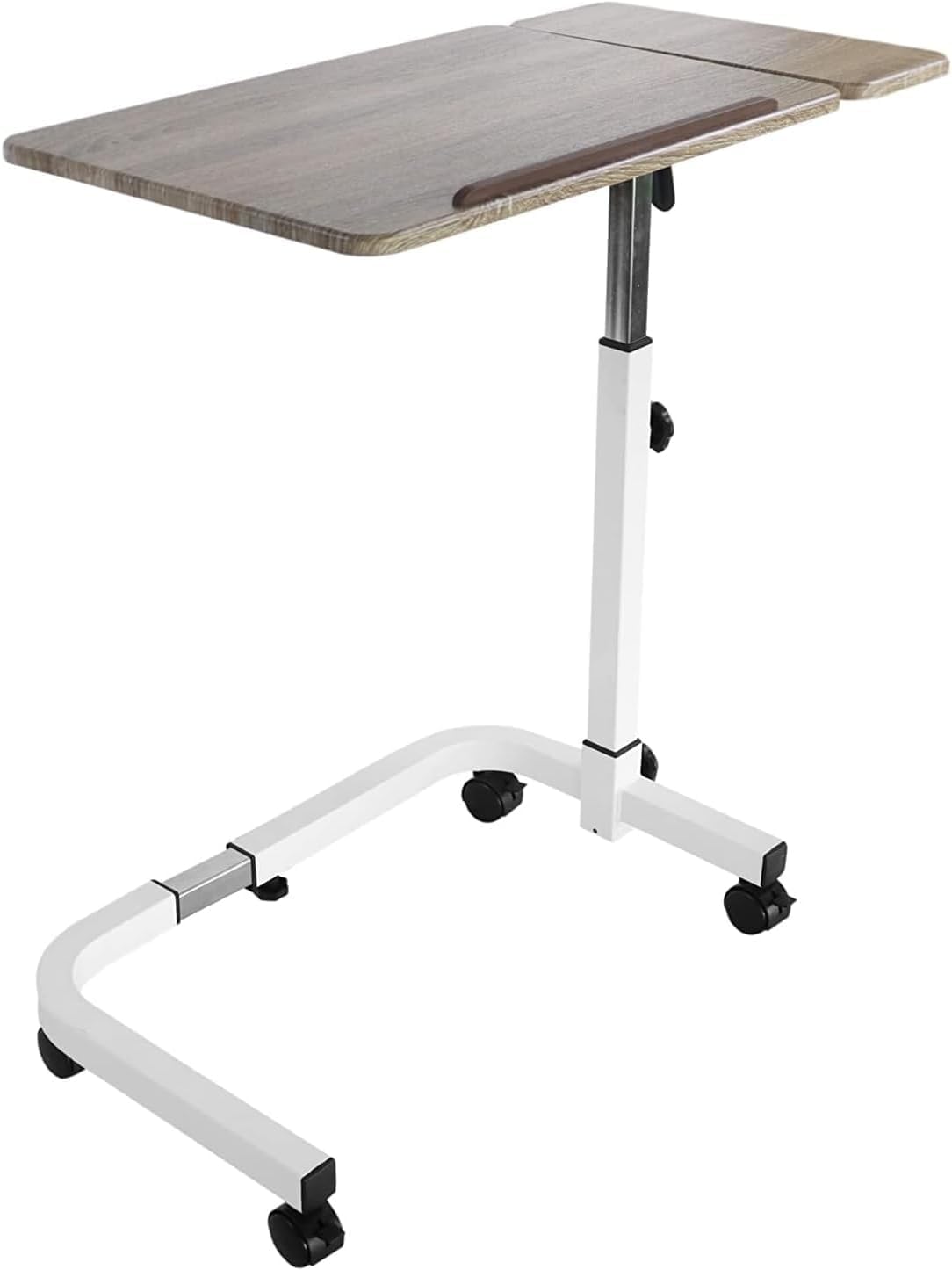
Adjustable Overbed Table KMINA — Meals & Reading
Height and tilt adjustable, 60×40 cm, anti-slip lip, lockable castors.
4. Adjustable bed rail
Getting up from bed is one of the hardest moves when strength fades. The adjustable rail with ergonomic handles provides stable support. 70-90 cm height range, wide non-slip base.
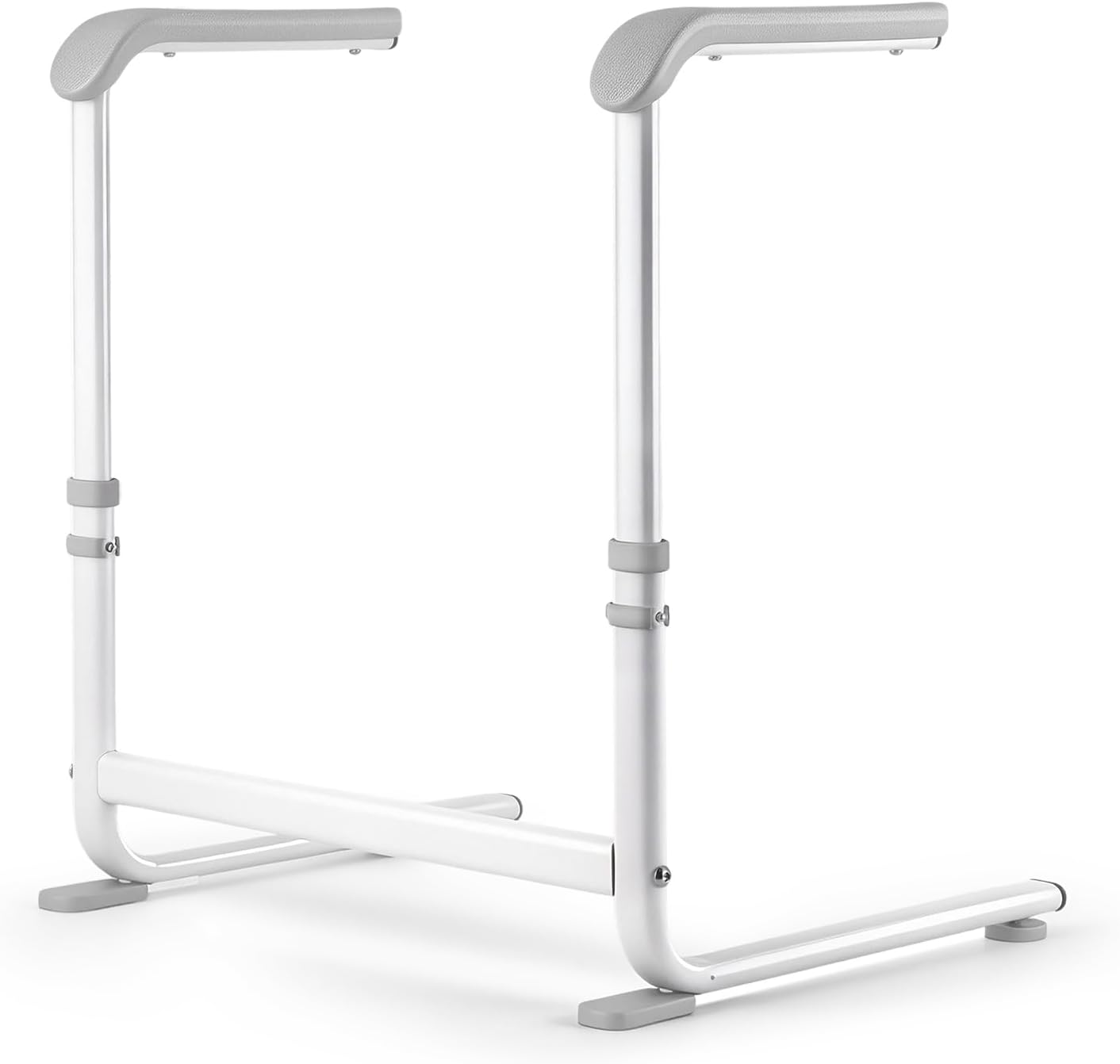
Adjustable Bed Rail — Standing Support
Ergonomic non-slip handles, 70-90 cm adjustable, wide base. Tool-free setup.
Mattress types compared
- Reflex foam: Good value, firm support. For independent movers.
- Memory foam: Body-contouring, pressure-relieving. Best for joint pain.
- Alternating pressure: Essential for bed-bound individuals.
- Hybrid (foam+gel): Support plus cooling.
Fall prevention in the bedroom
- Clear pathways: Remove loose rugs and cables between bed and door.
- Accessible lighting: Bedside lamp with large switch or automatic night light.
- Correct bed height: Feet should touch the floor when sitting on the edge.
Our verdict
Start with the orthopaedic back cushion. The Disabled Facilities Grant and NHS OT services can help fund these adaptations. VAT relief may apply.

FAQs
Is the pressure mattress NHS-funded?
Yes, via GP prescription. Annual renewal required.
Which pillow for neck pain?
Anatomical memory foam. 10-12 cm for back sleepers, 12-14 cm for side.
How to fit a bed rail?
Slide under mattress, no tools. Check tightness before each use.
Hospital bed compatible?
Yes, ensure table height exceeds bed’s maximum height.
Cleaning tips?
Wipe cover with damp cloth. Never submerge motor. Clean air filter monthly.
When to adapt a bedroom?
When getting up becomes difficult or night pain appears — regardless of age.

Guides similaires



🛒 Transparence : Cet article contient des liens d'affiliation Amazon. En tant que Partenaire Amazon, nous réalisons un bénéfice sur les achats remplissant les conditions requises. Cela ne change rien au prix que vous payez.